
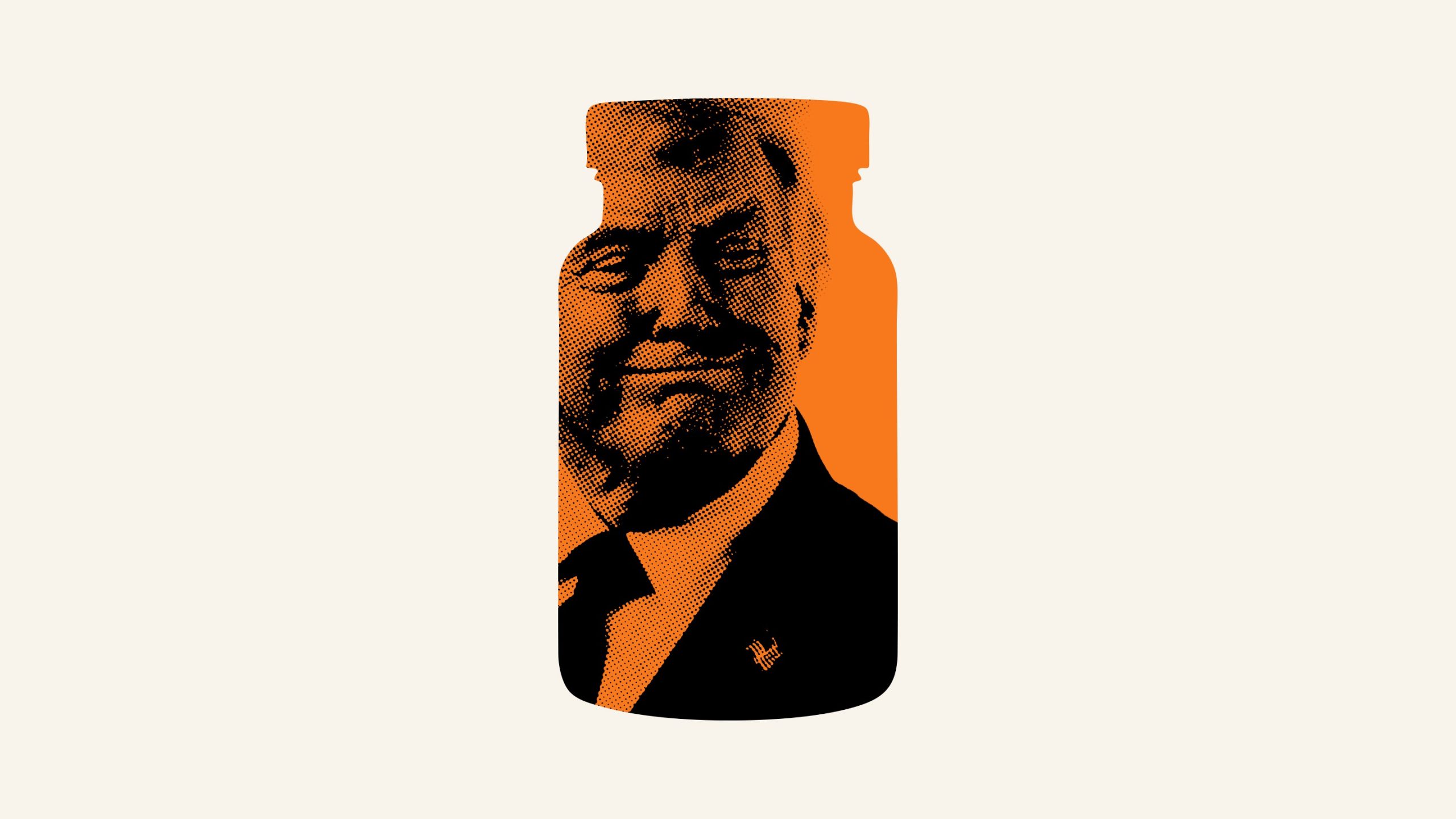
Nothing about TrumpRx is subtle. When you open up the government’s new online drugstore, the first thing you see is a banner with giant text: “Find the world’s lowest prices on prescription drugs.” Launched last night, TrumpRx allows Americans to purchase certain medications at steep discounts—either by buying them directly from the drug company, or by showing a coupon at the pharmacy. “Thanks to President Trump, the days of Big Pharma price-gouging are over,” the website says.
TrumpRx does make a compelling case that the president has mounted an extraordinary effort to stop pharmaceutical companies from ripping off Americans. The website offers discounts on some 40 drugs—the result of months of negotiations between drugmakers and the Trump administration. In a press conference announcing TrumpRx yesterday, Trump boasted that “16 of the 17 largest pharmaceutical companies have signed agreements” to list their drugs on the website. “And the other one is coming,” he added. The Trump administration was able to negotiate a nearly 85 percent discount on a trio of drugs typically used as part of IVF. Americans can also buy Wegovy, the wildly popular weight-loss injection, for as little as $199 a month, a fraction of the original list price.
But these are the exceptions. Most Americans looking for their prescription drugs won’t find that many deals on the site. Health care is complicated already, and TrumpRx apparently does not always offer the cheapest or best option. Those with insurance—some 85 percent of Americans—typically will get a better deal using the coverage they already have rather than paying out of pocket on TrumpRx. More than three-quarters of Americans with commercial insurance are eligible to pay $20 or less for a month’s supply of Xeljanz, a rheumatoid-arthritis drug. But customers paying cash via TrumpRx will still shell out more than $1,500.
[Read: Trump’s Ozempic deal has a major flaw]
Even people without insurance may be able to find better prices in some cases. Consider Protonix, a drug from Pfizer used to treat acid reflux. TrumpRx offers the drug for just over $200—a 55 percent discount from its typical $447. But what the website does not explain is that there’s a much cheaper generic version of Protonix on the market (but not available through TrumpRx). According to GoodRx, a drug-discount website similar to TrumpRx, the generic version can be purchased for less than $10. The same is true for Pristiq, an antidepressant. Consumers can buy the drug for $200 on TrumpRx, or get the generic via GoodRx for a tenth of the price. Patients going through financial hardships can also sometimes qualify for charity programs, which subsidize their prescriptions.
The big winners of yesterday’s announcement do not seem to be patients, but rather drug companies. The Trump administration got drugmakers to the negotiating table last year by writing letters to the companies threatening to “deploy every tool in our arsenal to protect American families from continued abusive drug pricing practices.” Drugmakers were able to turn the threat into a PR opportunity: When Pfizer cut a deal to participate in the program, the company’s CEO, Albert Bourla, was brought to the West Wing, where Trump called the drug company “one of the greatest in the world.”
Drug companies have also successfully protected their ability to charge whatever they please for some of their biggest moneymakers. Yesterday, Trump claimed that the website includes discounts for “dozens of the most commonly used prescription drugs,” but many of the pharmaceutical industry’s best-selling products—some of which also are among their more expensive offerings—are absent from the website. Take Keytruda, Merck’s cancer drug that was the world’s best seller until it was recently surpassed by the weight-loss and diabetes injection tirzepatide: That drug retails for roughly $12,000 for a three-week course of treatment, and it is missing from TrumpRx. Of the top 10 best-selling prescription drugs in 2024, only one—Ozempic—is listed on TrumpRx.
TrumpRx may become better with age. A White House press release from December named multiple additional drugs that are supposed to be included in TrumpRx but are not. The drug maker Gilead Sciences, the White House touted in the press release, will sell one of its hepatitis C medications for some $2,400, rather than its original asking price of nearly $25,000. Kush Desai, a White House spokesperson, told me in an email that only five companies’ drugs have been added to the TrumpRx website so far. In its negotiations, the administration has also secured commitments from drugmakers that when they launch new drugs, they will not charge Americans more than they charge other similar nations, which has the potential to dramatically lower the prices Americans pay for new medicines. (It’s still unclear, however, if all of those new drugs will also be available on TrumpRx.)
For Americans who find discounts on TrumpRx, the platform is likely to make a meaningful difference in their lives. It’s addressing, in its so-far-limited ways, a persistent problem in American life. That said, Trump has claimed to provide Americans real relief at the pharmacy counter before. During his first term, the president said that seniors would soon receive $200 discount cards in the mail that they could bring to the pharmacy to help defray the high costs of their drugs. The cards never showed up. This time, the downloadable coupons, at least, are real. They are branded with a golden eagle holding a TrumpRx ribbon in its talons.